One moment.
Loading page…
Site History
The evolution of chrislanejones.com through various technologies, frameworks, and design iterations-from WordPress 2.1 to modern Next.js.
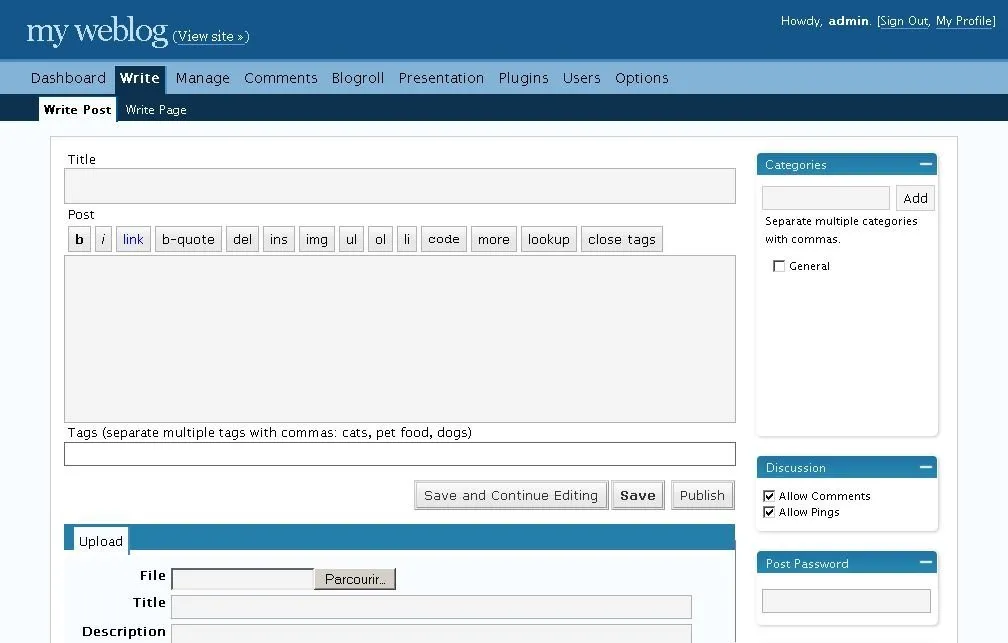
My first professional website was built on WordPress 2.1, released in January 2007. I modified the iconic Kubrick theme by Michael Heilemann—the default WordPress theme that defined an era of blogging.
The Kubrick theme was elegant in its simplicity: a clean white background, blue header, customizable header image, and that distinctive rounded sidebar. The domain was inspirationalexperiences.org.
In 2013, I graduated with a Bachelor of Arts in Television Production after three video production communications internships at the University of North Florida.
I started my career in video editing working at a local church in Jacksonville, FL—First Baptist Church of Jacksonville. When I worked at the church, I spent hours designing my website and I decided to switch careers to building websites.
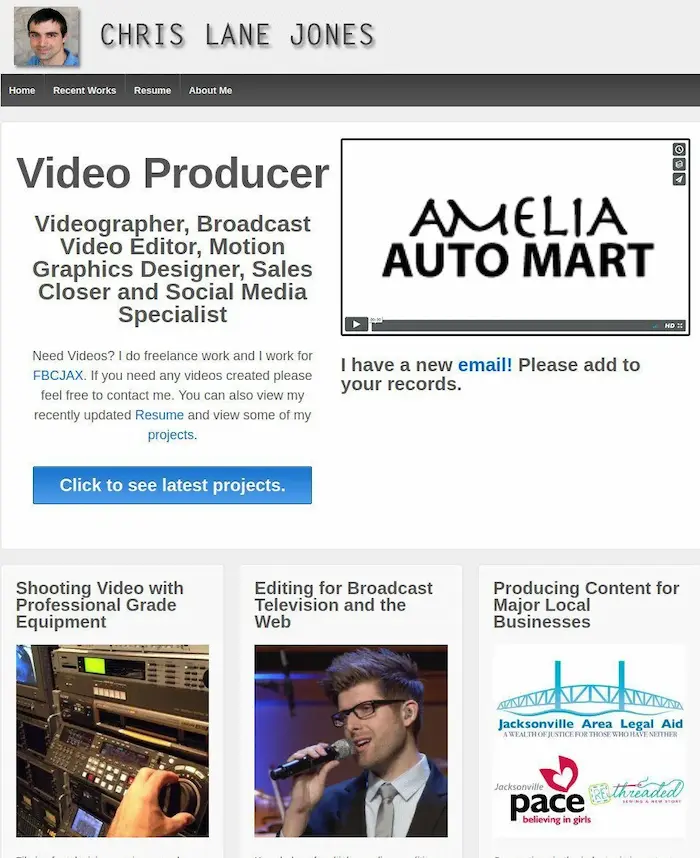
This video production website portfolio helped me land my first job in tech, even though it referenced me being a video editor and web designer.
I used a responsive theme to build my website, which was still a new concept in 2014. My first job in tech was at Web.com, and the majority of the websites were not responsive when I started.
This site was built with the CyberChimps Responsive WordPress theme—one of the early champions of mobile-first design in the WordPress ecosystem.
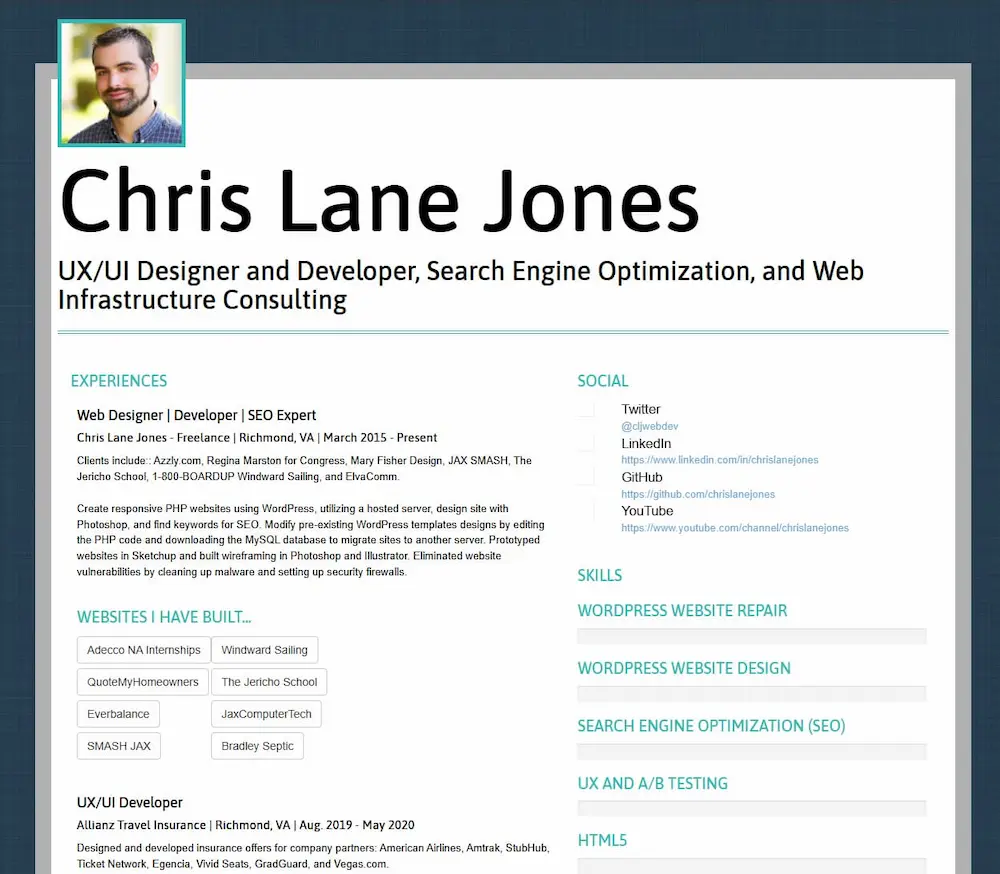
I built my own WordPress website from scratch using Bootstrap, and honestly... it was ugly. I can't believe it was up for so long.
This website was live during my move to Virginia, a period of major life and career transition. Looking back, it's a humbling reminder that not every design decision ages well. The Bootstrap grid was there, the functionality worked, but the aesthetic? Let's just say it was more 'functional' than 'beautiful.'
Despite its appearance, this site served its purpose—it got me through contract work, networking events, and eventually led to better opportunities. It's proof that perfect is the enemy of done, and sometimes you just need to ship it and iterate later.

This site was built during my transition from WordPress to React—a bridge between two worlds. I was falling in love with React's component model and growing increasingly frustrated with WordPress's direction, particularly the controversies surrounding Matt Mullenweg and the platform's fractured ecosystem.
The block editor (Gutenberg) felt clunky compared to the elegance of React components. The WordPress drama was exhausting. And most importantly, I wanted the creative freedom that React offered—especially for animations and micro-interactions.
React with Framer Motion made it trivially easy to add smooth, performant animations that would have been painful in WordPress.
This site didn't last long. By mid-2025, I had fully transitioned to a modern React stack with Next.js, TypeScript, Tailwind CSS, and Framer Motion.
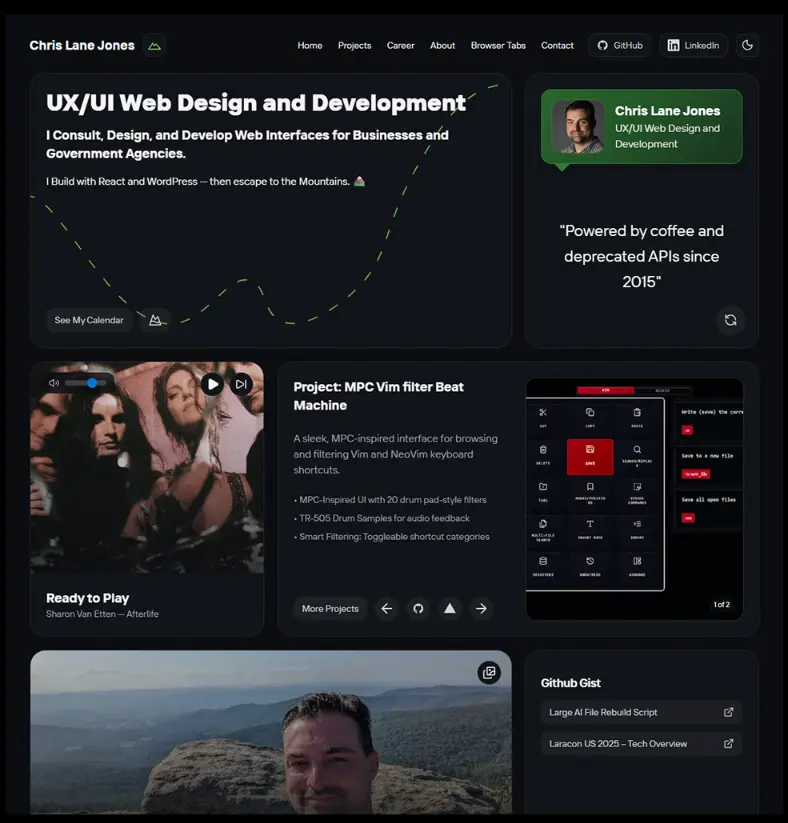
In 2025, I moved the site to Next.js, React, TypeScript, Tailwind CSS, and Framer Motion.
I finally had the creative freedom I'd been craving. Framer Motion made animations smooth and intuitive. The component-based architecture meant I could build reusable pieces and iterate quickly. TypeScript caught bugs before they reached production. Tailwind made styling fast and consistent.
The bento grid layout, the smooth page transitions, the interactive components, the dark mode—all of this would have been significantly harder in WordPress. React gave me the tools to build the portfolio site I'd always envisioned.
Looking ahead, I'm excited to continue to push what's possible with modern web technologies. The journey continues.
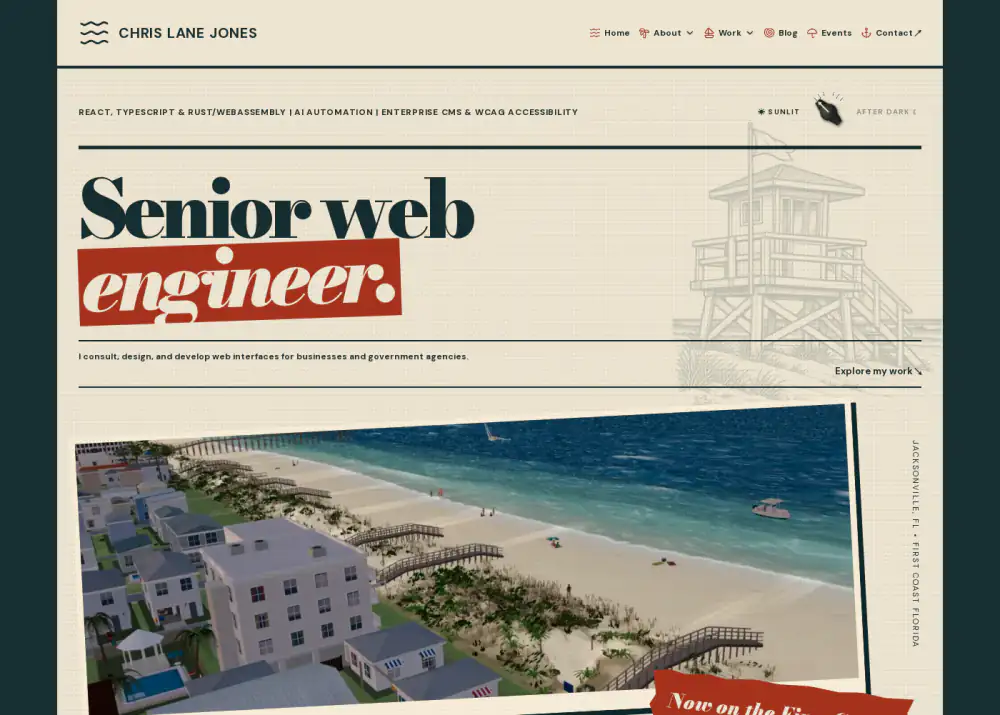
In 2026 we moved back to Florida after eight years in Virginia, and the site moved with us. I traded the mountain theme for the coast, and a waves icon took the mountain's place.
It changed a lot in its first year. The first beach version had a drawn shoreline on every inner page, where a click sent a surfer and then a dolphin across the scene. In October it became a coastal magazine: cream paper and dark teal ink, big Bodoni headlines, a working radio, an Events section, and a Let's meet page.
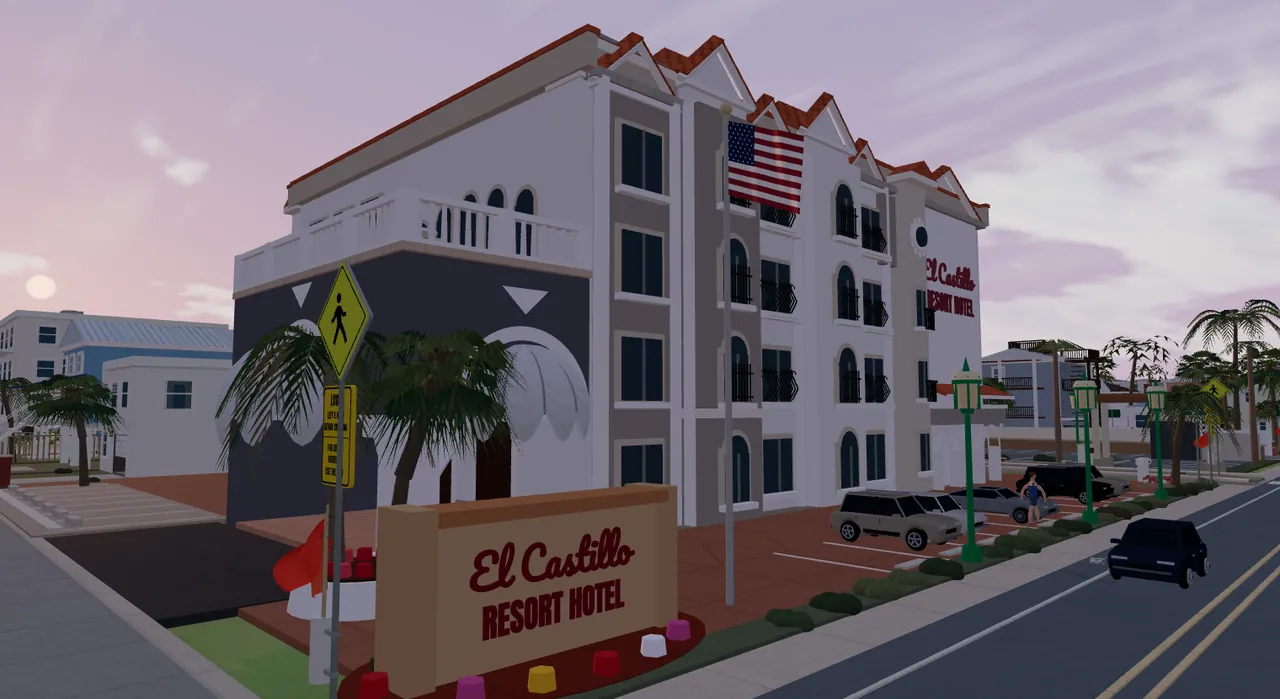
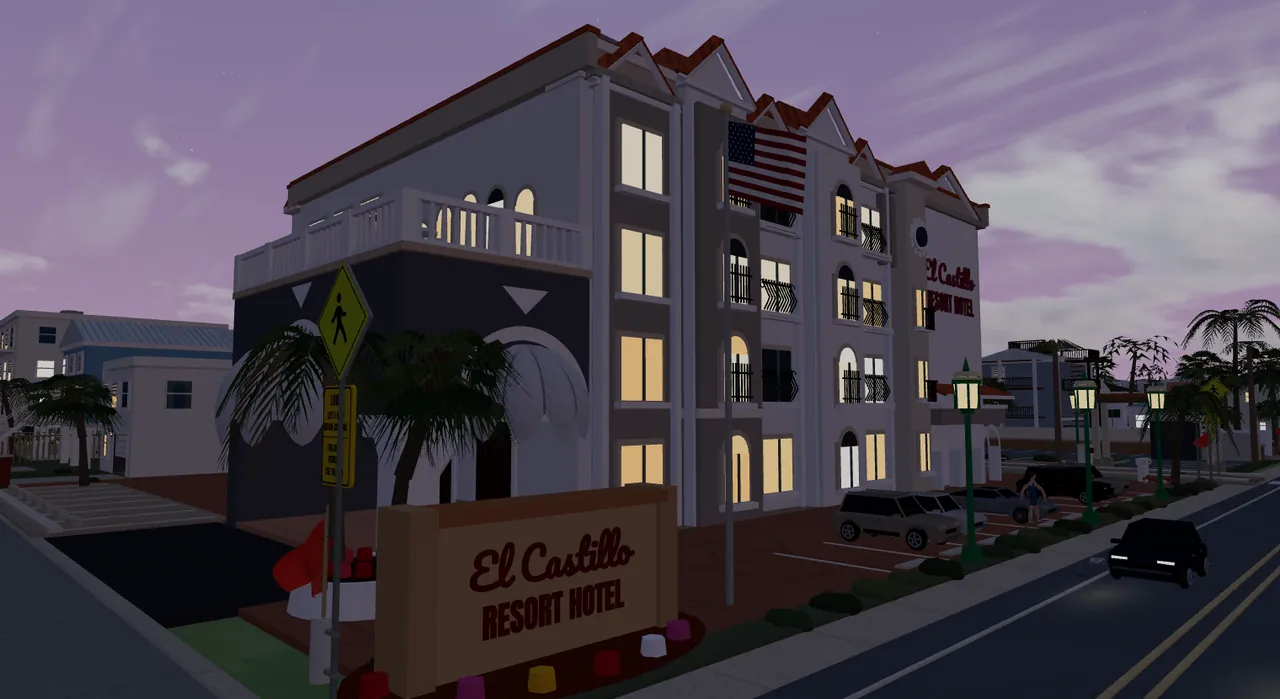
The pictures come from my 3d-world app, a 3D model of the beach towns around St. Augustine. The home page plays a short loop of it, and every inner page has its own shot of the town in Sunlit and After dark. The sandcastle builder made with React Three Fiber is still at the bottom of the home page.
The stack stayed Next.js, React, and TypeScript, with Convex holding the content behind a custom admin. On 11-19-2026 it even got a costume for a video game launch, the Beach City edition. It's the most fun I've had building this site, and it finally looks like where I live.